
Preparing for Your Gap Year: The Pre-Departure Checklist
 By Sam10 min read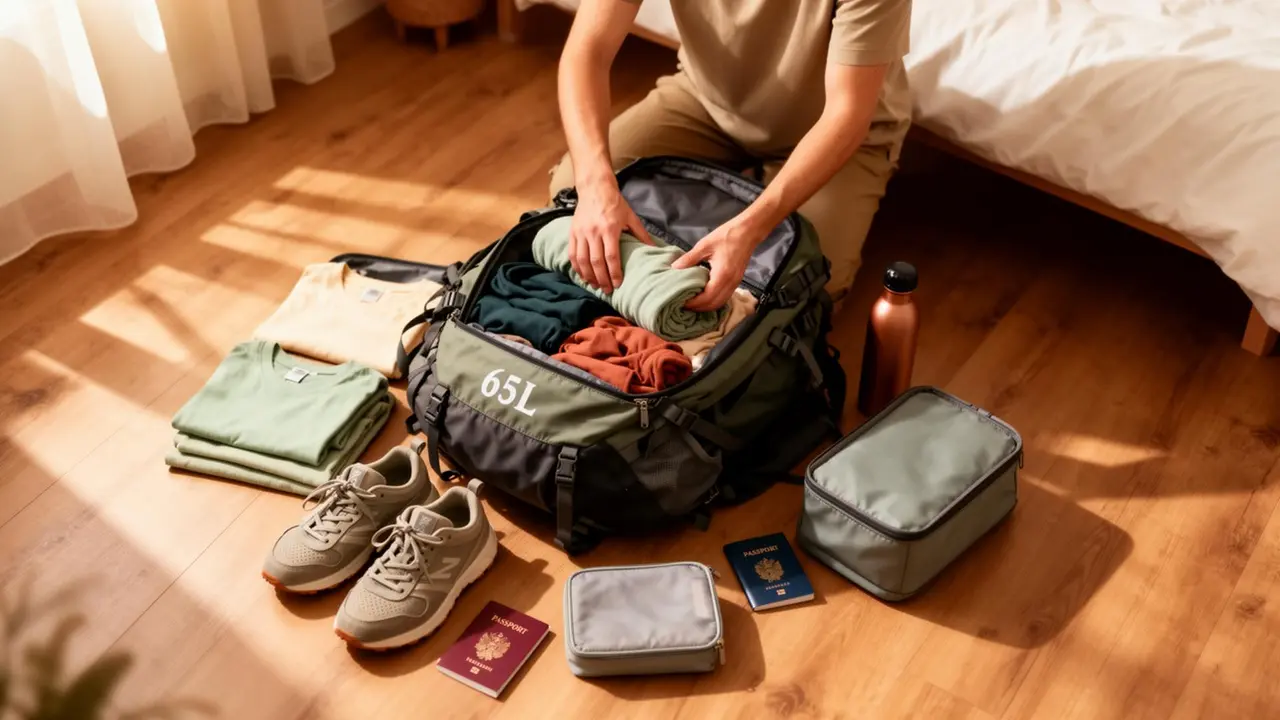
Booking the flight is the easy bit. The few months before departure are where a gap year is quietly made or broken: the wrong passport date, a missed jab, a card that locks on day two. This guide walks you through what UK travellers need to sort, in the order you should sort it — roughly 6 months out, 8 weeks out, and 2 weeks out.
Start 6 months out: documents and visas
Your UK passport
Two rules trip up British travellers more than anything else, especially in Europe post-Brexit:
- Issued within the last 10 years on the date you enter a Schengen country.
- At least 3 months validity remaining on the date you intend to leave that country.
Most of the rest of the world wants 6 months validity beyond your return date, so use 6 months as your safe default. If you're cutting it close, renew now via GOV.UK — standard turnaround is around 3 weeks, but build in a buffer.
Make two backups:
- A clear photo of the photo page on your phone, plus emailed to yourself.
- A printed photocopy stored separately from your passport.
Visas, ETAs and ETIAS
Check entry requirements country by country on GOV.UK Foreign travel advice. For UK passport holders in 2026, watch out for:
- ETIAS for Schengen — a paid travel authorisation expected to launch in late 2026. Once live, you'll need to apply online before you fly.
- UK ETA-style schemes in countries like the US (ESTA), Canada (eTA), Australia (eVisitor/ETA) and New Zealand (NZeTA). These are quick online forms but must be done before boarding.
- Long-stay visas for working holidays (Australia, New Zealand, Canada, Japan), volunteering or study. These can take weeks or months — start early.
Travel insurance — and why a GHIC isn't enough
Buy a proper backpacker / long-stay policy as soon as you book flights, so cancellation cover kicks in immediately. Look for:
- Emergency medical and repatriation cover of at least £2 million (£5 million+ for the US).
- Trip length matching your full itinerary (many standard policies cap at 31 days).
- Adventure activity cover if you plan to trek, dive, ski or ride a moped.
- Baggage and gadget cover with a per-item limit that actually covers your laptop and phone.
Providers UK gap-year travellers commonly use include True Traveller, World Nomads, Battleface and STA-style backpacker policies. Compare on a site like MoneySavingExpert's travel insurance guide.
If any of your trip is in the EU, also apply (free) for a Global Health Insurance Card (GHIC) — the post-Brexit replacement for the EHIC. It gives you access to state healthcare in the EU on the same terms as locals, but it is not a substitute for travel insurance.
8 weeks out: health and jabs
Travel clinic appointment
Book a travel health appointment at your GP surgery or a private travel clinic (Boots, MASTA, Nomad) 6–8 weeks before you fly. You'll need the time to space doses out.
Free on the NHS in most areas:
- Polio (combined with diphtheria and tetanus)
- Typhoid
- Hepatitis A
- Cholera
Usually paid privately:
- Yellow fever (you'll get an International Certificate of Vaccination — required for entry to many countries in Africa and South America)
- Rabies pre-exposure
- Japanese encephalitis
- Hepatitis B (sometimes free)
- Tick-borne encephalitis
Cross-reference your destinations with TravelHealthPro (NaTHNaC) and, if you're in Scotland, fitfortravel — these are the official UK sources.
Malaria, antimalarials and mosquito kit
Antimalarials (Malarone, doxycycline, mefloquine) are prescribed based on where exactly you're going — even within one country, risk varies. Most are private prescriptions; budget £1–£3 per tablet and remember some need to start before you arrive.
Medications and a basic check-up
- Ask your GP for a printed list of any regular prescriptions using generic drug names (brand names differ abroad).
- Take enough medication for the trip if practical, in original labelled packaging, with a letter from your GP for anything controlled.
- Get a dental check-up before you leave. A filling in Edinburgh is a much better experience than a filling in a remote bus town.
- Pack a small first-aid kit: rehydration sachets, paracetamol/ibuprofen, antihistamines, antiseptic, plasters, blister plasters, Imodium and a short course of broad-spectrum antibiotics if your travel clinic recommends them.
4–6 weeks out: money and banking
UK high-street debit cards can sting you with non-sterling transaction fees (typically 2.75%) plus ATM fees. Sort this before you go.
Fee-free everyday spending
Open at least one of these for daily spending — most can be set up in under 10 minutes:
- Chase UK — no foreign transaction fees, 1% cashback in the first year, free ATM withdrawals abroad (within fair-use limits).
- Starling Bank — no fees on card payments or ATM withdrawals worldwide.
- Monzo — free card payments abroad; ATM withdrawals are free up to £200 per 30 days outside the EEA, then 3%.
- Revolut or Wise — excellent for holding and converting multiple currencies at near-interbank rates. Wise also gives you local account details in GBP, EUR, USD and more.
A backup credit card
Carry one fee-free credit card as your emergency layer. The Halifax Clarity card is the long-standing UK favourite — no foreign transaction fees and competitive cash withdrawal rates (though always pay off in full, as interest applies to withdrawals from day one). Barclaycard Rewards is another solid option.
Rule of thumb: two cards, two providers (one Visa, one Mastercard), stored in two different bags. Add a small cash float in the local currency for arrival day.
Tell someone, not your bank
You no longer need to "notify" most modern UK banks of travel — their fraud systems handle it. But do:
- Set up app notifications for every transaction so you spot fraud instantly.
- Make sure someone at home has a power of attorney or at least access to manage urgent admin if you go off-grid.
- Set up online access to your HMRC personal tax account before you leave in case you need it abroad.
2–4 weeks out: tech and connectivity
eSIMs vs local SIMs
For most short stops, an eSIM is the fastest way to get online the second you land. Airalo, Holafly and Saily all work well from a UK iPhone or modern Android. For longer stays in one country (a month-plus), a local prepaid SIM is usually cheaper per GB — buy it at the airport or a phone shop on arrival.
Quick checks before you fly:
- Confirm your phone is unlocked (most UK contracts unlock automatically now, but verify).
- Confirm it supports eSIM if that's your plan.
Offline maps and translation
Download in advance, on hotel Wi-Fi, not on a bus with 5% battery:
- Google Maps offline areas for every city and region.
- Maps.me or Organic Maps for hiking and walking trails.
- Google Translate offline language packs for every country you'll visit.
- Citymapper for the cities it supports.
Apps worth installing now
- WhatsApp — assume this is the default messaging app everywhere.
- XE Currency — offline currency conversion.
- Splitwise — for any travel you'll do with friends.
- TrustedHousesitters / Workaway / Worldpackers — if you're trading work for accommodation.
- More to Roam — to manage your trip plan and, if you're crowdfunding any of it, your campaign.
Power and adapters
Buy one good universal adapter (Skross or similar) with built-in USB-A and USB-C rather than three cheap ones. Add a 10,000–20,000 mAh power bank — under 100Wh so it's allowed in carry-on.
Driving abroad
If you'll drive or hire a scooter:
- Bring your photocard UK driving licence.
- Many countries require an International Driving Permit (IDP). You can only buy these in person at a Post Office in the UK — £5.50, valid 1 or 3 years depending on the convention. Check GOV.UK's IDP page for which type each country needs.
- Generate a DVLA driving licence check code before you go — many hire companies ask for it.
Packing: the 40–50L test
Aim for everything you own on the road to fit in one 40–50 litre backpack, ideally with a smaller daypack. A few UK-specific notes:
- Test-pack a week before departure and walk a mile with it loaded. If you hate it now, you'll loathe it in 30°C humidity.
- Layer for weather, not destination — a merino base layer, a fleece, and a packable waterproof cover most of the planet.
- Bring plug-in mosquito repellent plugs only if useful for your route; DEET-based spray (50%) is more practical.
- Quick-dry travel towel, padlock for hostel lockers, head torch, dry bag.
- Photocopies of: passport, travel insurance policy and 24-hour emergency number, GHIC, vaccination certificate, visa approvals, two passport photos.
A simple pre-departure timeline
6 months out  Renew passport, book flights, buy insurance, apply for long-stay visas
3 months out  Apply for short-stay e-visas / ETAs, GHIC, IDP, open fee-free bank accounts
8 weeks out   Travel clinic, vaccinations, antimalarial prescription
4 weeks out   Dental check, repeat prescriptions, kit shopping
2 weeks out   eSIM, offline maps, translation packs, FCDO travel advice re-check
Departure week  Photocopy documents, share itinerary with family, test-pack
One last thing: FCDO and STEP-equivalent
Before you fly, read the FCDO Foreign Travel Advice page for every country on your route — it's the official UK government guidance on safety, entry rules and local laws, and it updates frequently. If anything serious happens (natural disaster, civil unrest), the FCDO is who your insurer and family will be referencing.
Sort the boring stuff now and you'll spend your gap year on the actual adventure, not on hold to a bank from a hostel reception.
Frequently asked questions
Related articles
Top Volunteering Opportunities for Gap Year Travellers
Discover enriching things to do in a gap year with top volunteering opportunities abroad — combining adventure travel, cultural immersion and meaningful work.

How a Gap Year Affects Your UCAS and University Application
Deferred entry, personal statements, admissions tutor views and the real impact of a gap year on your university application — with practical steps.

The Ultimate Gap Year Packing List (2026 Edition)
A tested, category-by-category gap year packing list — what to bring, what to leave, and the gear that is worth spending money on.